Showing posts with label Health. Show all posts

Wednesday, March 3, 2010

Why Interval Training is preferred?


Some studies have found that brief intervals of high intensity training are more effective at maintaining muscle and building their capacity for lactic acid oxidation. Lactic acid builds up as muscles undergo intense strain. You may recognize this as the burning sensation you might sometimes feel as you’re trying to lift that last rep or trying to sprint the last 100m of a good jog. During the recovery from bout of the high intensity, lactic acid is broken down. This process uses energy from carbohydrate storage or fat.

Interval training may be better than a moderate intensity run for losing fat and getting lean. So next time you’re heading out for your weekly (or monthly or whenever you can get yourself off the couch) run, perhaps head down to the track instead and run 5 or 6 400m sprints, each followed by 2 minutes of rest. It may take less time than a 10k jog, but it may be just as effective.


Monday, March 1, 2010

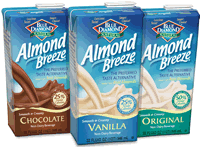
Almond Milk vs Rice Milk vs Coconut Milk


As the name implies, Almond Milk is derived from milk of almonds and is big on taste, light on calories. Almonds may be one of the healthiest nuts you can eat. In fact, they are often noted for their heart-healthy benefits because about 70% of almonds is monounsaturated fat. They are also a good source of protein and fiber. Almonds are known to be rich in minerals, other advantages to almond milk include its lack of cholesterol and the fact it doesn't cause lactose problems.

Rice milk is made from processed short-grain brown rice and may be one of the best non-allergic milks as more people tend to be more allergic to soy or almond
milks. rice milk has no protein and there is little fat in rice milk.

Coconut milk contains calcium, potassium, chloride, vitamin A and E. Coconut milk helps to reduce blood pressure, blood sugar and improve bone and dental health. it’s a dairy free alternat
ive to milk products. Coconut milk contains lauric acid that has anti-bacterial, anti-microbial, anti-fungal and anti-viral properties. As such, coconut
milk can help to strengthen the immune system by getting rid of stomach bacteria, the flu, colds, sore throat and a range of illnesses. There are several kinds of antioxidants found in coconut milk. Antioxidants help the body to scavenge dangerous free radicals that can degenerate the cells of the body. Therefore, coconut milk can help to prevent cancers of the body.


Pomegranate - Super Fruit with Rich Antioxidant

What are pomegranates good for? Researchers report that they are rich in antioxidants that can keep bad LDL cholesterol from oxidizing (American Journal of Clinical Nutrition, May 2000). This degradation of LDL seems to be an initial step in the development of atherosclerosis. In addition, pomegranate juice, like aspirin, can help keep blood platelets from clumping together to form unwanted clots.

Pomegranate juice tested higher in overall phenolic content and antioxidant activity than red wine, concord grape, blueberry and orange juices, a study found by Dr David Heber of the David Geffen School of Medicine at UCLA said pomegranate juice ranked higher than other beverages that have recently found touted as containing superior levels of antioxidants such as acai juice and white and green teas. The antioxidant potency composite index of pomegranate juice was at least 20 percent greater than any other beverages included in the study.


Friday, February 26, 2010

Spirulina - Main Superfood Ingredient


There are many spirulina health benefits that make it a very popular health food.

Spirulina (Arthrospira platensis) is a blue-green edible algae. It is a natural whole food that has nourished people in many countries around the world for centuries. It was consumed by the Aztecs over five centuries ago.

Spirulina health benefits have been demonstrated over a long history of safe human consumption and this super green food is considered one of the world's healthiest foods because it contains a powerful combination of nutrients.

Although spirulina has been eaten by people for centuries, it was only approximately 30 years ago that scientists rediscovered this amazing superfood and have since produced hundreds of scientific studies about spirulina health benefits.

Why have spirulina heath benefits been the subject of such intense research? Because spirulina can be economically cultivated all over the globe and contains more nutrition per acre than any other grain, herb or food that is grown! This is why it is called a super food. It is an amazing health food that could actually help end world hunger and malnutrition.

Spirulina Health Benefits

Spirulina is safe for both people and animals and provides excellent whole-body nourishment. It is more than 60% protein and is 95% digestible.

Spirulina health benefits include the antioxidant support of beta-carotene, gamma linolenic acid, known for helping to promote joint health, as well as proteins, amino acids, iron, magnesium, and other minerals, vitamin B-12 and B complex and other essential vitamins, the essential fatty acid GLA (gamma-linolenic acid), and the cleansing and detoxifying power of chlorophyll, among other benefits.

Most people consume too many acidic foods, such as coffee, soda, alcohol, sugar and meat. Spirulina is an alkaline food that can help balance your body toward more healthful alkalinity.

Another spirulina health benefit is how it can help alleviate sinus allergies. In fact, a doctor and researcher wrote in the Journal of Medicinal Food about a medical study that demonstrated this benefit. The doctor noted "This is the first time that a nutraceutical has been shown to have beneficial effects on the machinery that causes human allergies." Journal of Medicinal Food8(1):27-30, 2005.

Easy to digest, spirulina provides energy and stamina for work and play, and can benefit children, pregnant and nursing mothers, adults with poor eating habits, people who are fasting or dieting, athletes, senior citizens, ill people who need more nourishment, and anyone who wants to increase their resistance to disease.

In fact, most people would benefit from adding a good source of spirulina to their daily diet. A measure of the powder mixed in fruit or vegetable juice or smoothies or a number of tablets of spirulina taken every day can support many spirulina health benefits.

The tablets can be taken anytime at home, work, or on the road. The powder can be added to a smoothie for breakfast, for a mid-morning or mid-afternoon pickup, or before dinner so you will eat less if you are watching your weight.

Are There any Spirulina Side Effects?

Spirulina is a food and has a long history of safe use. However there is a wide range in quality, because spirulina is cultivated in many countries. Some algae harvested from polluted lakes and waterways might be contaminated. Buy from a trusted source.

Today, most spirulina is being safely and scientifically cultivated in pure waters at specially designed aquatic farms. Some of the best quality product is grown in the pristine clean waters of Hawaii which is why Hawaiian spirulina is famous for its reputed spirulina health benefits.

Tips on How to Choose / Buy

Spirulina is now available in 70 countries and can be purchased from most health food outlets as well as through the internet. But before you buy, check the label or the source to see where it was grown and if the cultivation was controlled for a pure culture.

Thursday, February 18, 2010

Energy Booster 2: Oats

Oats contain the energizing and stress-lowering B vitamin family, which helps transform carbs into usable energy. Oats are also low on the glycemic index because they have a lot of fiber. That means that your body gets a steady stream of energy, as opposed to a short-term spike, because the carbohydrates gradually flow into your bloodstream.The key here is to look for high-fiber oatmeal, like oat bran. For the best nutrition kick, avoid instant oatmeal and stick with more natural varieties, my favorite are steel cut and groats

Wednesday, February 17, 2010

Natural Choices to improve muscle performance

What is the best way to nurse muscle after a good work out session? Forget smelly rubs or ice packs, some of the best remedies are found in nature.

Ginger

Even wonder about the powerful and pungent aroma of ginger? It's due to its main active compound, gingerol, which besides being a natural air freshener is also a top-notch anti-inflammatory. Gingerols are believed to neutralize free radicals that can ignite inflammation and help reduce pain caused by muscle aches and joint pain.

Celery

The pale-green stalks are more than just party-platter garnishes. Wild celery contains the compound 3-n-butylphthalide (3nB). Initial studies have suggested celery extract containing 85% 3nB may minimize muscle and joint pain. Because they are rich in potassium and sodium, celery juice is embraced as an ideal post-workout tonic. It replenishes spent electrolytes, tones the vascular system and lowers blood pressure, all of which help support stressed muscle. Celery seeds anti-inflammatory properties also help quell muscle spasms.

Ginseng

There are two commonly used species of ginseng - Asian and American - and both appear to increase the strength and endurance and they help curb the effects of excessive physical stress. A 2005 study in The Journal of Strength and Conditioning Research suggests supplementing with ginseng can encourage muscles to train longer and improve performance. According to California State Polytechnic University, Michael T Liang, it is believed that ginseng's active ingredients, ginsenosides, help the muscle by delaying one's point of exhaustion.

Tuesday, February 16, 2010

Sip a Hot Drink

From a young age, everyone learns how relaxing it can be to curl up with a cup of hot tea and coca. A lot of people have a strong liking of drinking very hot beverages such as the Japanese and Chinese. But exactly, how hot is too hot?

Several studies have shown there's a strong associations between drinking hot liquids - higher than 65 degrees centigrade - and increased esophageal cancer risk. This finding was published in 2009 issue of the British Medical Journal.

Remember it is not the beverage, it is the temperature.